Building Conversational Commerce with Multi-Agent Swarms on GCP
An architectural blueprint for implementing multi-agent conversational commerce systems on Google Cloud Platform using Google Developer Studio frameworks.

Building Conversational Commerce with Multi-Agent Swarms on GCP
An architectural blueprint for implementing multi-agent conversational commerce systems on Google Cloud Platform using Google Developer Studio frameworks.
Quick Summary
- Multi-agent swarms coordinate autonomous AI agents to manage complex conversational commerce workflows.
- Google Developer Studio provides metadata structures and publication templates for AI-driven Conversational User Interfaces (CUIs).
- Google Cloud Platform supplies the underlying infrastructure required to deploy scalable machine learning workloads.
- Engineering teams must balance non-deterministic agent loops with strict inventory and payment transactional integrity.
What Changed?
Traditional conversational commerce relied on monolithic chatbots that processed linear user intents through a single language model instance. While effective for simple FAQ retrieval, these monolithic designs struggle with multi-faceted workflows like simultaneous cart management, inventory verification, and secure payment routing.
The shift toward decentralized multi-agent swarms, as detailed in documentation from Google Developers, allows engineering teams to break down commerce logic into specialized autonomous agents. Using structured metadata frameworks provided by Google Developer Studio, developers can standardize how these agent swarms communicate, share state, and execute discrete domain-specific tasks without overloading a single execution context.
Technical Breakdown
From a system architecture perspective, multi-agent conversational commerce relies on three core pillars: agent orchestration, message passing, and workload isolation.
Agent orchestration involves routing user inputs from a primary CUI interface to specialized sub-agents. Rather than a single prompt handling everything, dedicated agents manage isolated concerns—such as catalog searches or discount applications. Message passing facilitates inter-agent communication, allowing agents to negotiate parameters before returning a unified response to the user.
Google Cloud Platform provides the foundational infrastructure to isolate these workloads. By deploying individual agents or agent clusters to scalable cloud infrastructure, teams can scale specific computational bottlenecks independently. For instance, high-frequency inventory checks can scale horizontally without impacting the payment routing layer.
Example
Consider a multi-agent structural blueprint designed to process an e-commerce checkout flow. The primary CUI entry point receives a user request to purchase a specific item.
- Orchestration Agent: Receives the natural language input, parses the user intent, and delegates tasks to domain-specific sub-agents.
- Inventory Agent: Queries backend databases via secure GCP networking to verify real-time stock levels for the requested item.
- Cart Management Agent: Updates the user's active session state, applying eligible discounts or promotional codes.
- Payment Routing Agent: Interacts with secure third-party payment gateways once inventory and cart states are confirmed.
This modular pipeline ensures that each agent maintains a focused operational scope, minimizing context window bloat and reducing error rates in transactional workflows.
Practical Advice
For engineering teams structuring their first autonomous agent workflows, establishing clear boundary definitions is essential.
- Isolate State Management: Avoid letting agents share a monolithic mutable state. Pass explicit, immutable context payloads between agent handoffs.
- Standardize Metadata: Utilize established templates and metadata schemas, such as those found in Google Developer Studio, to maintain consistency across agent definitions.
- Implement Guardrails: Enforce strict programmatic validation on outputs generated by non-deterministic language models before passing data to financial APIs.
Limitations
Implementing multi-agent conversational commerce introduces distinct technical constraints that teams must account for during design.
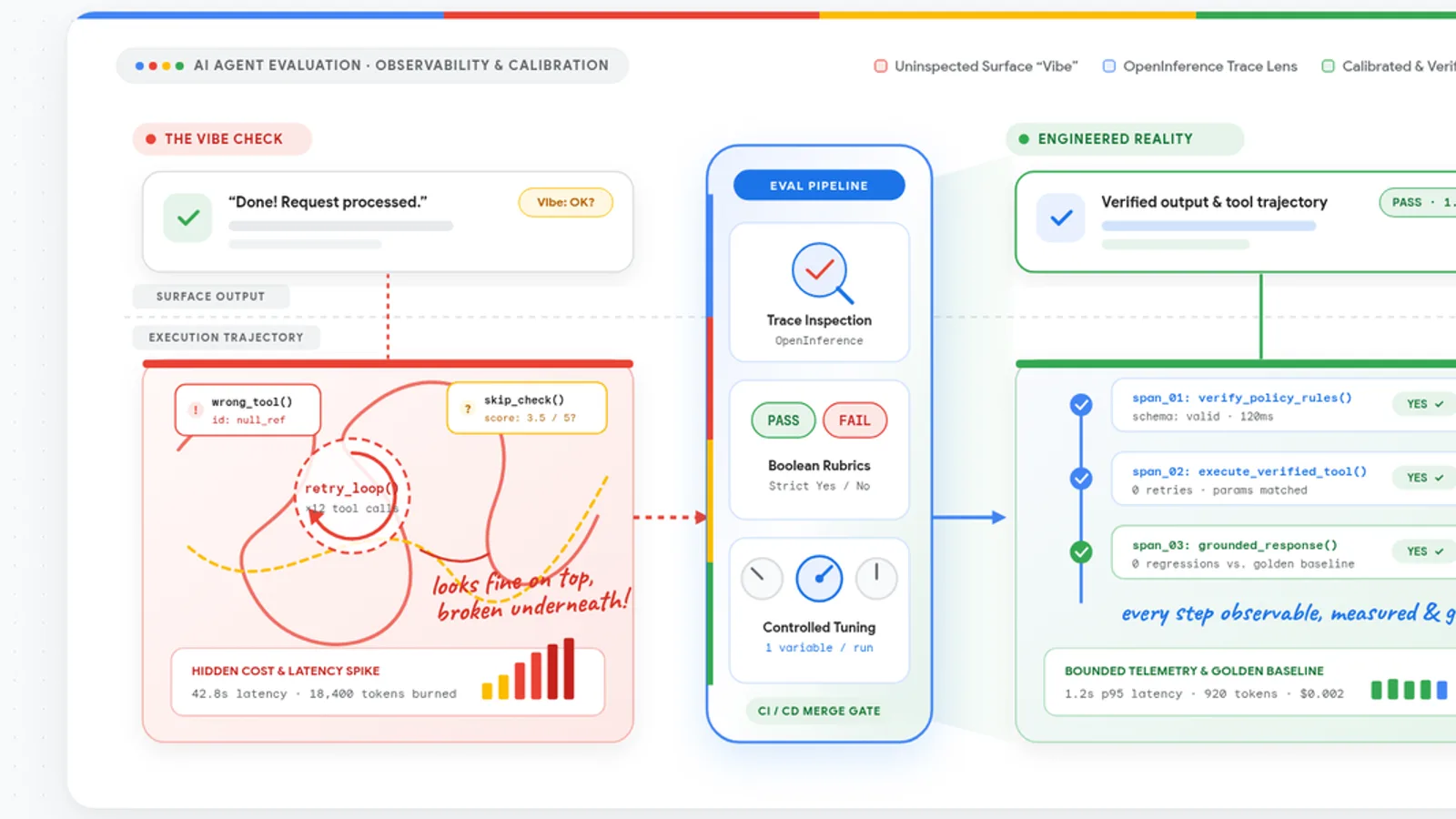
Latency is a primary concern. Because multi-agent swarms require sequential or iterative message passing between multiple AI models and backend services, end-user response times can increase significantly compared to monolithic endpoints.
State synchronization across distributed agents also presents challenges. In high-concurrency environments, race conditions can occur if two agents attempt to modify cart or inventory states simultaneously. Managing non-deterministic agent loops requires rigorous testing, as LLM-driven execution paths can occasionally produce unexpected behavioral loops or fallback states.
CodePlay Developer Take
From a development perspective, moving to multi-agent architectures trades simplicity for modularity. While debugging a single monolithic prompt is straightforward, tracing an error across a decentralized swarm of communicating agents requires extensive observability tooling. Teams must invest in distributed tracing and structured logging on GCP to track agent handoffs and payload transformations.
Maintainability improves over time because individual agents can be updated or replaced without rewriting the entire CUI logic. However, the initial architectural overhead is high, making these patterns best suited for complex, enterprise-grade commerce workflows rather than simple conversational interfaces.
CodePlay Verdict
Multi-agent conversational commerce frameworks offer a blueprint for managing complex, multi-step transactions on GCP. Organizations should adopt these patterns when building applications that require deep integration between natural language interfaces and disparate backend microservices. For simpler use cases, traditional monolithic architectures remain more cost-effective and easier to maintain.
Sources & Further Reading
Sources & Further Reading
CodePlay Insights references primary sources. Original reporting and announcements belong to their publishers.